Install Vineforce Teams Lite | Linux
- Purpose: Install the silent-mode background tracker application on Linux distributions.
- Navigation: Log in to the web portal, go to the Downloads menu, and select Vineforce Teams Lite for Linux.
- Installation: Open the downloaded
.shscript in a text editor, copy the code, paste it into a Terminal window, and run it withsudocredentials. - Impact: The tracker starts automatically in the background and uploads logs to the Vineforce Teams web portal.
Linux
What is Vineforce Teams Lite for Linux?
Vineforce Teams Lite is a background activity tracking application designed for silent deployment. It runs without interrupting the user's workspace workflow and automatically records activity metrics in the background.
This guide walks you through the simplified installation process using our automated shell script for Linux.
What are the Linux Prerequisites?
Ensure the target Linux machine meets the following requirements before starting:
| Requirement | Details |
|---|---|
| Operating System | Supported Linux distributions (Ubuntu, Fedora, Debian, etc.) |
| Privileges | Sudo/Root privileges required to run the installation script |
| Internet Access | Active connection required to download the installation packages |
| Disk Space | Minimum of 200 MB of available storage |
How to Download and Install Vineforce Teams Lite on Linux
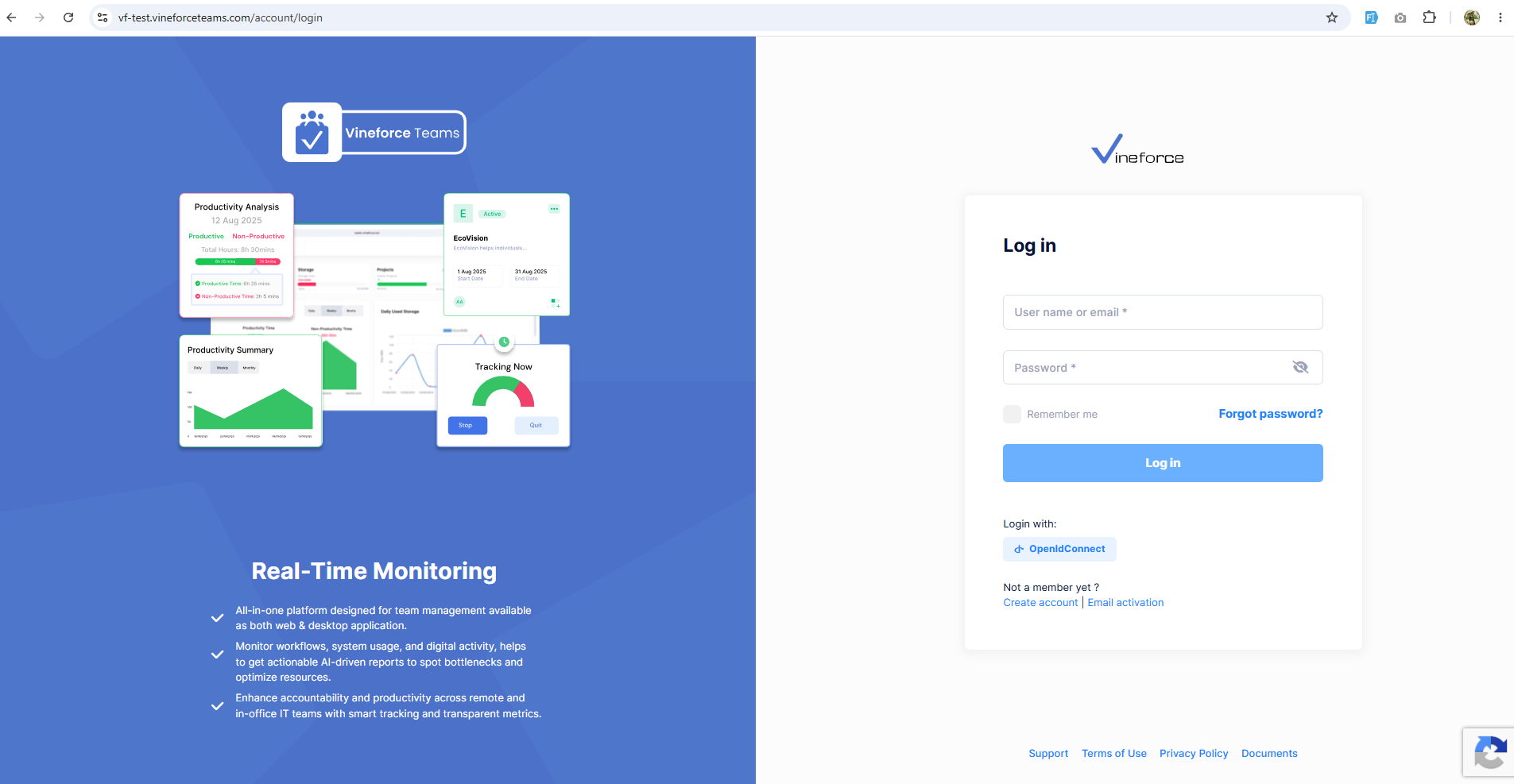
Step 1: Sign In to the Web Portal
Log in to your organization's Vineforce Teams web portal. The URL is specific to your tenancy:
https://<your-tenancy-name>.vineforceteams.com/account/login
Example: If your tenancy name is vf-test, the login URL would be https://vf-test.vineforceteams.com/account/login.
Step 2: Download the Shell Script
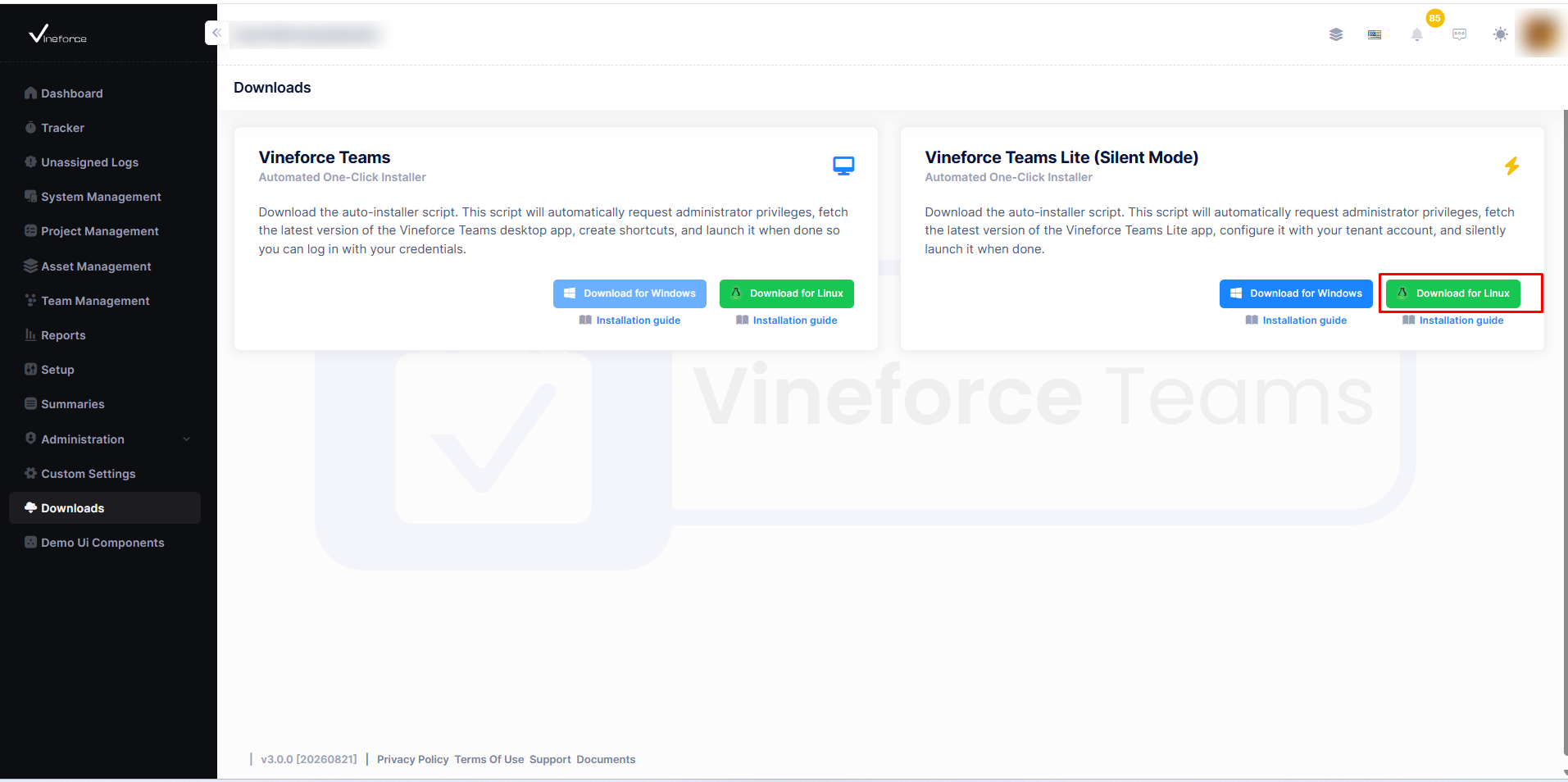
- Navigate to the Downloads section from the left-hand navigation menu.
- Locate the Vineforce Teams section.
- Click Download VineforceLite for Linux.
This action downloads a shell script file (.sh) to your local computer.
Step 3: Copy the Installation Script
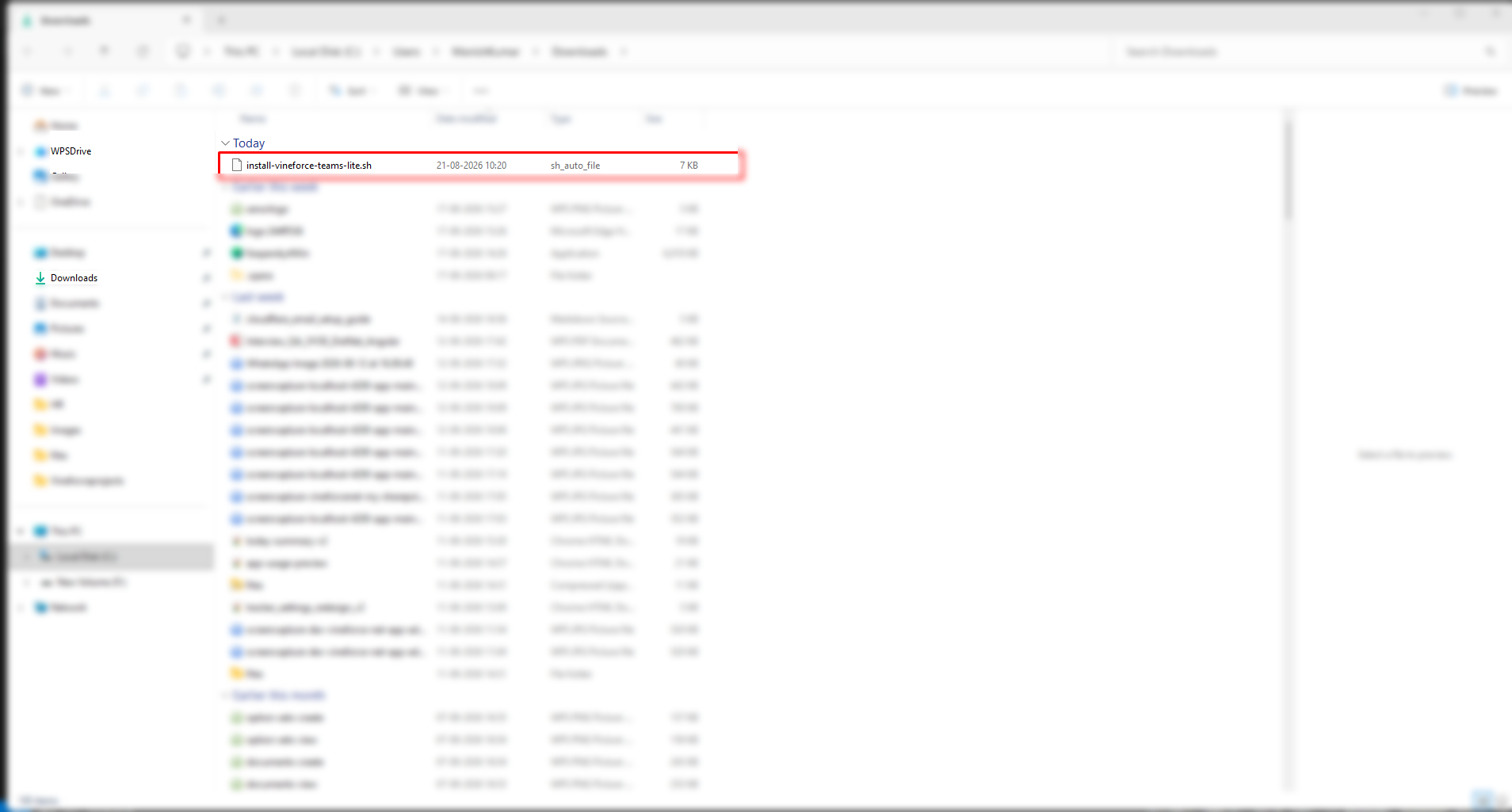
- Open your local Downloads directory (or the destination folder).
- Double-click the downloaded
.shfile to open it in your default text editor (such as Gedit or VS Code). - Select all the text in the file and copy the entire script code.
Step 4: Run the Script in the Terminal
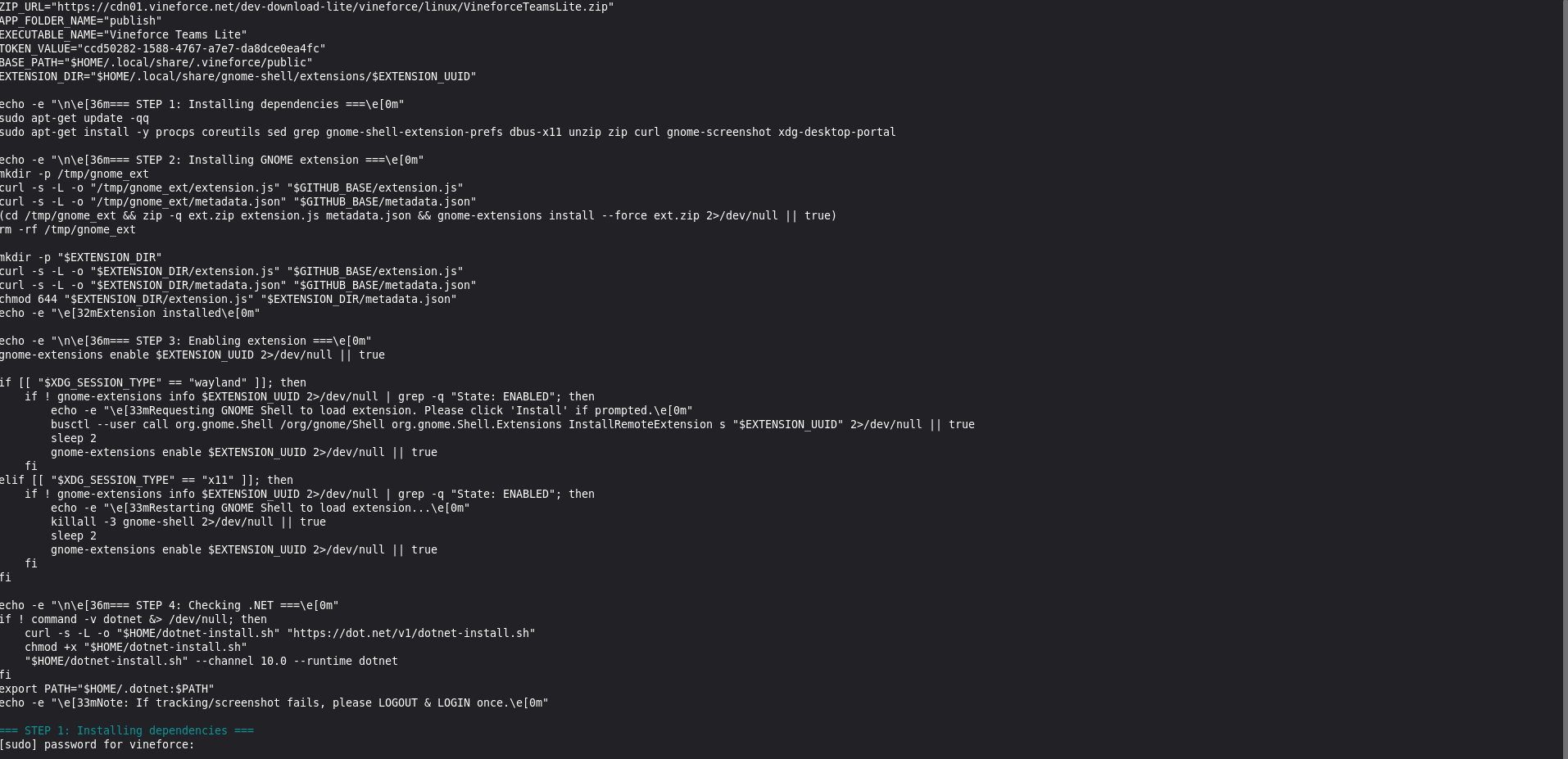
- Open a new Terminal window on your Linux system.
- Paste the copied script code into the terminal.
- Press Enter to run the script.
- If prompted, type your system password (sudo password) and press Enter (note: the characters will not show in the console for security).
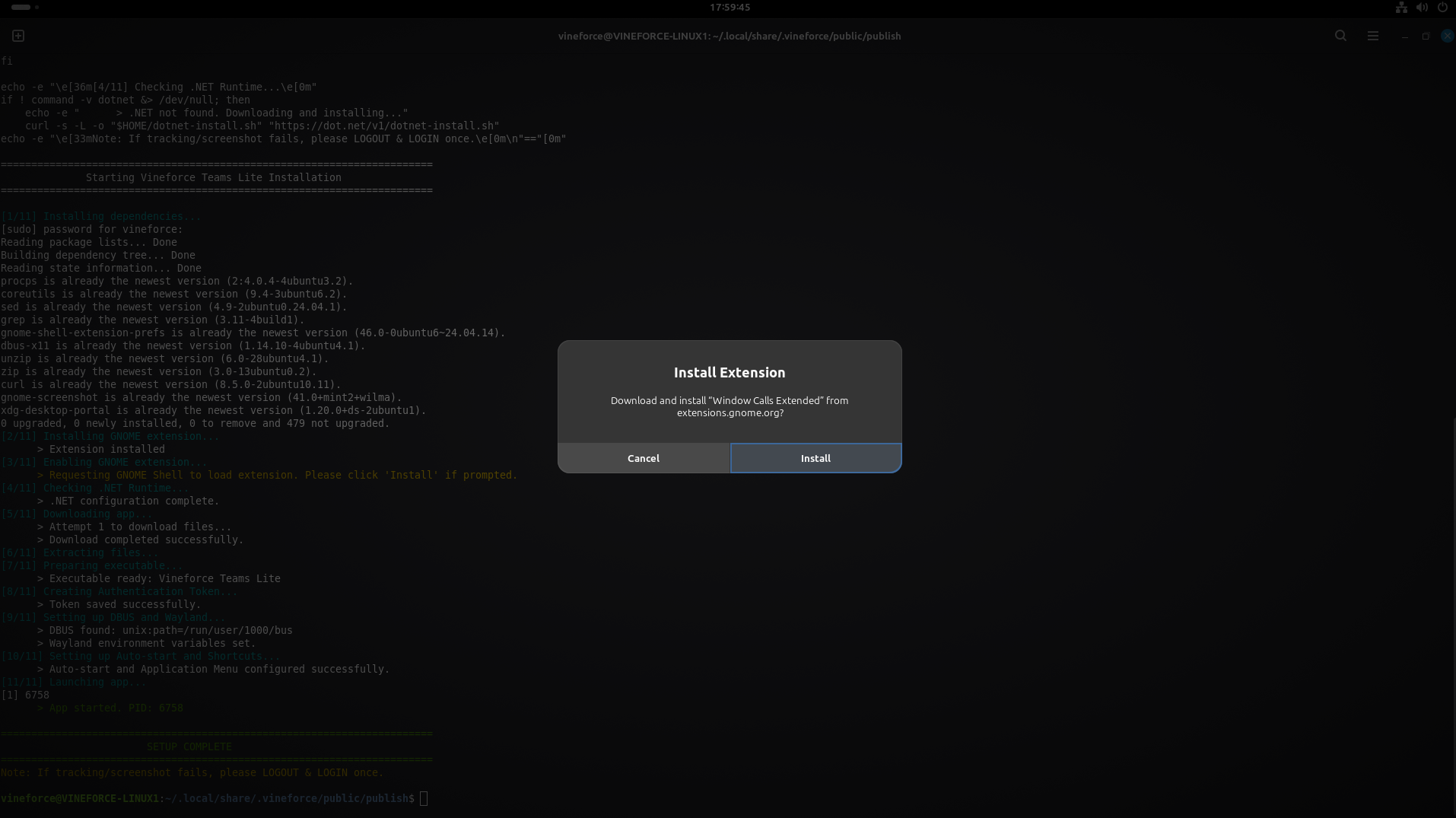
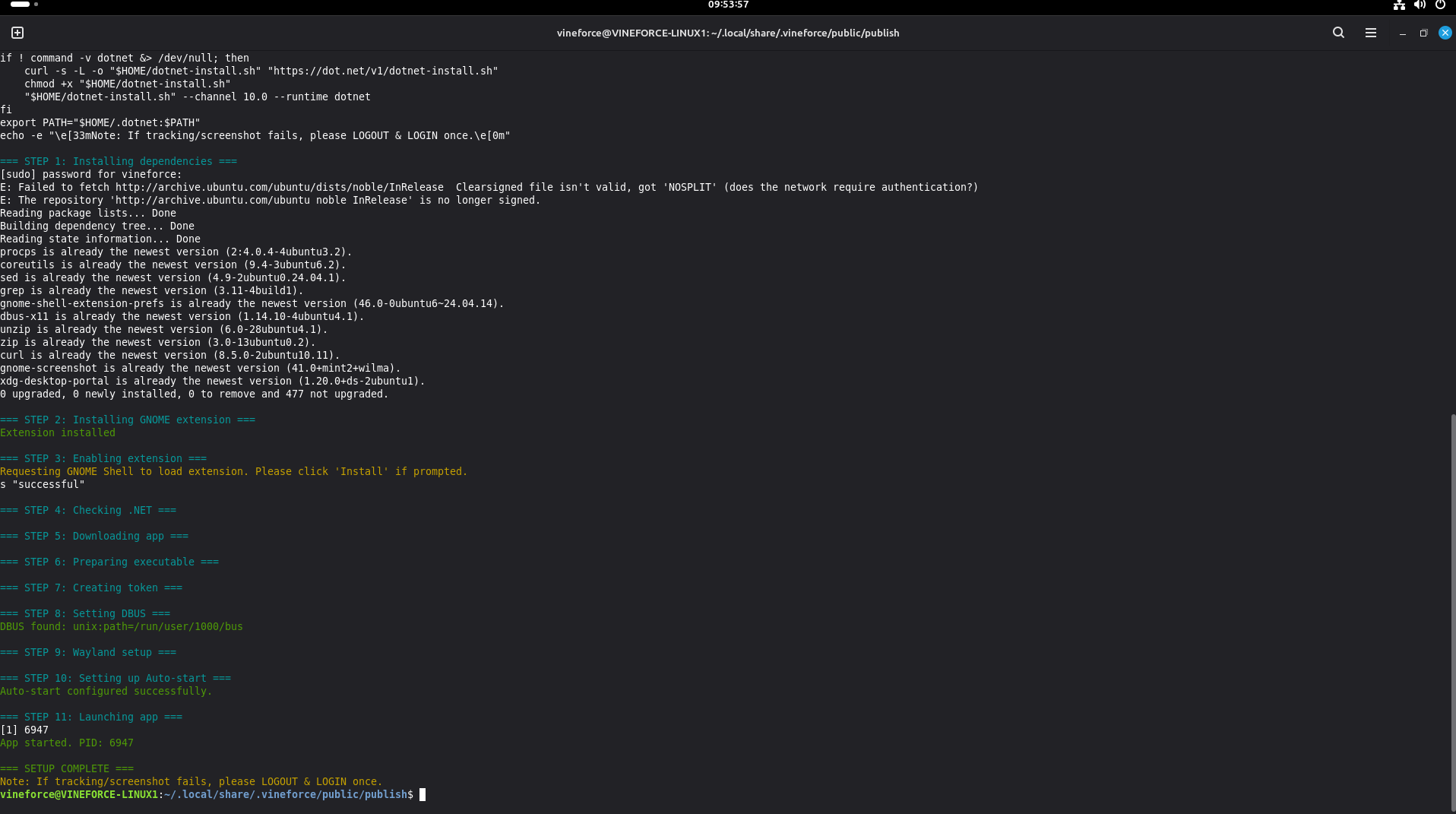
The script will begin downloading required dependencies, configuring the environment, and setting up the tracker service.
If you are running the GNOME desktop environment, a popup may ask you to install the Window Calls Extended extension. Click Install to allow the application to capture active window titles and screenshots correctly.
How to Verify the Background Service is Running on Linux
To confirm the tracker is active:
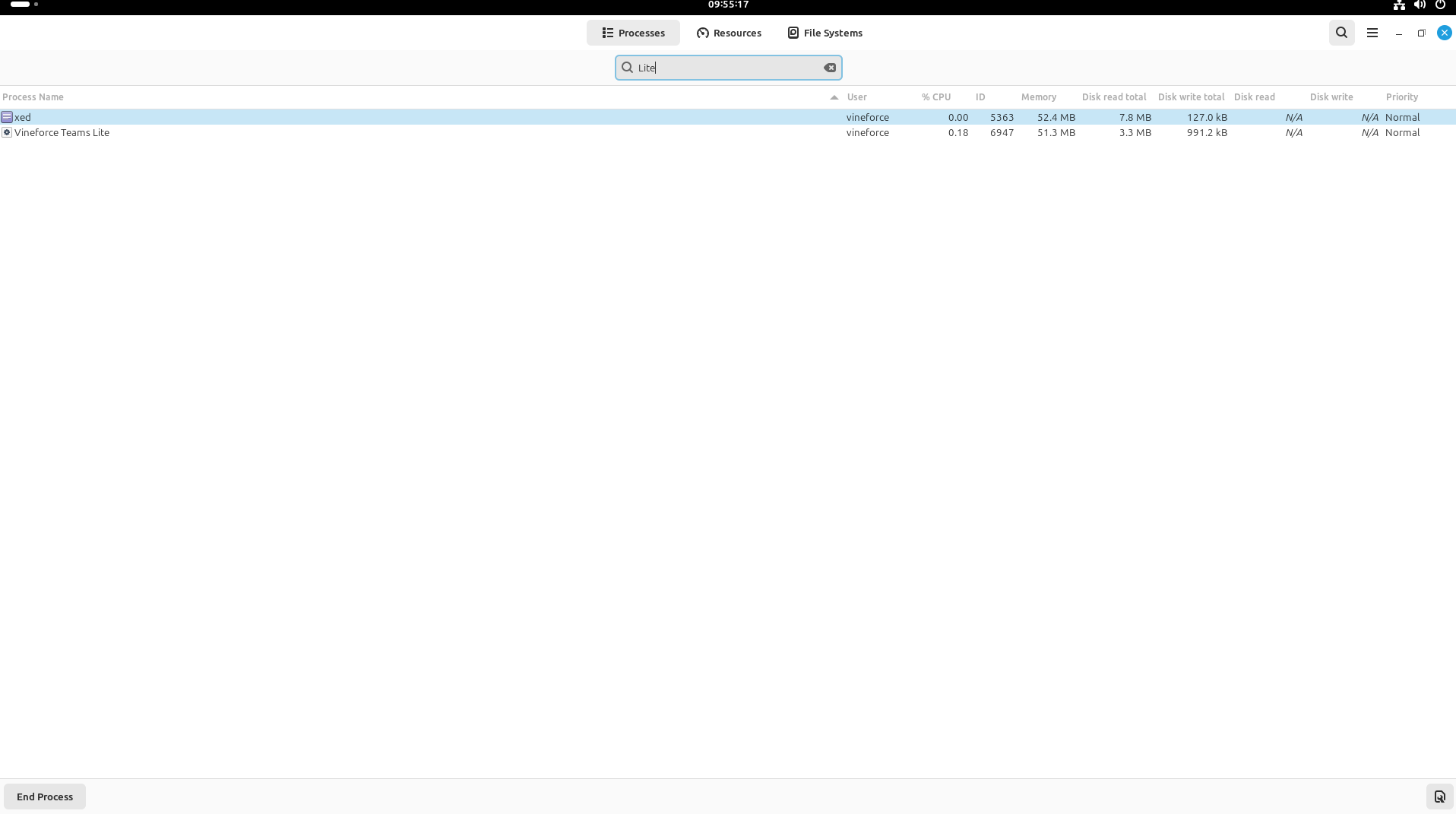
- Open your system's System Monitor tool.
- Filter or search the processes tab for "Lite".
- Verify that the
Vineforce Teams Liteprocess is active.
If activity logging or screenshot capturing does not work after installation, you must log out of your Linux session and log back in for the GNOME extension changes to take effect. You can trigger a logout from the terminal using gnome-session-quit --logout.
How to Troubleshoot Linux Installation Errors
| Problem | Potential Cause | Recommended Solution |
|---|---|---|
| Permission Denied | Script execution blocked | Run chmod +x filename.sh in the terminal to grant execute permissions. |
| Gnome Extension Missing | Gnome-shell integration missing | Re-run script and ensure you click "Install" on UAC / Gnome prompts. |
| Package Manager Lock | Concurrent updates | Wait for system updates to finish, close other package managers, and re-run the script. |
Frequently Asked Questions (FAQ)
Does the Linux tracker support automated startup?
Yes. The shell script configures system startup profiles to ensure that the background tracker service initializes automatically upon user login.
What should I do if my logs show up in Unassigned Logs?
This occurs when the Linux machine has not been mapped to an employee profile in the portal. Navigate to Tracker → Unassigned Logs in the web app to associate the machine hostname with the correct user.
Which Linux distributions are supported?
The script is optimized for Debian, Ubuntu, and Fedora-based distributions. Contact support for assistance with other packages.
Related Functionality
- Reconcile Unassigned Logs: Learn how to map time tracking logs synced from this machine to employee profiles.
- Tracker Settings: Adjust intervals, idle thresholds, and screenshot quality.
- Uninstall Vineforce Teams Lite (Linux): Learn how to remove the silent Linux tracker.